

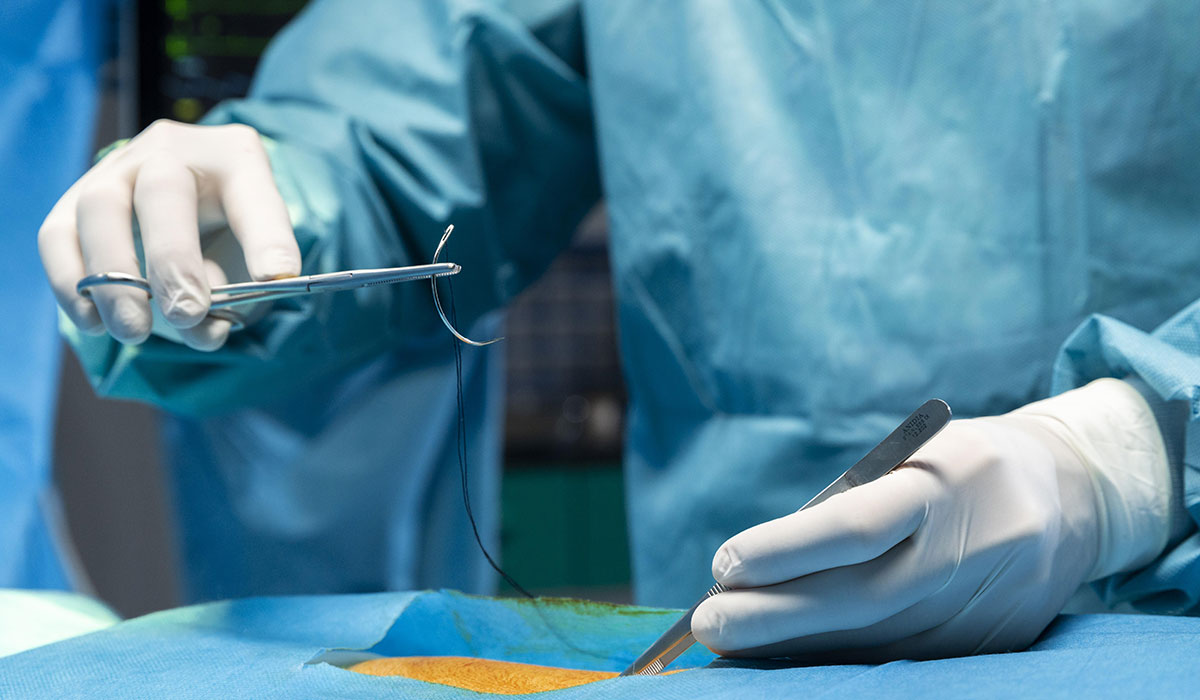
Surgical Staplers vs. Sutures
In modern surgeries, wound closure is a critical step that directly impacts healing speed, infection risk, and scar appearance. The two main methods for wound closure are surgical staplers and sutures, each with its own features, advantages, and limitations.


Surgical Staplers, Speed and Efficiency
Surgical staplers consist of biocompatible metal clips, typically titanium or stainless steel, applied to the wound using a specialized device. This method is preferred in many procedures due to its high speed and reduced surgery time.
Advantages of Surgical Staplers:
- Rapid wound closure, ideal for emergency surgeries and C-sections
- Lower infection risk due to minimal tissue contact
- High durability, reducing the risk of wound reopening in high-movement areas like the abdomen and scalp
Limitations of Surgical Staplers:
- Higher likelihood of prominent scars, especially in cosmetic surgeries
- Limited flexibility, suitable only for linear and straight wounds
- Requires removal by a physician, unlike absorbable sutures
Sutures, Precision and Flexibility
Surgical sutures are made from various materials and can be absorbable or non-absorbable, depending on the procedure. This method is preferred for more precise wound closure and minimizing scar formation.
Advantages of Sutures:
- Greater control over wound healing, ideal for cosmetic and plastic surgeries
- Finer scar appearance compared to staplers
- Availability of absorbable sutures, eliminating the need for removal in certain procedures
Limitations of Sutures:
- Requires more skill and time for precise stitching
- Higher infection risk due to direct contact between the suture and tissue
Comparison of Surgical Staplers and Sutures
| Feature | Surgical Staplers | Sutures |
|---|---|---|
| Application Speed | Very fast, enables wound closure in seconds | Time-consuming, requires precise manual stitching |
| Flexibility | Lower, suitable for straight wounds | Higher, ideal for irregular wounds |
| Infection Risk | Lower, minimal tissue contact | Higher, direct contact with wound |
| Scarring | More visible scars | Less visible, finer scars |
| Removal Requirement | Yes, must be removed by a physician | Varies, absorbable sutures do not require removal |
| Common Uses | Emergency surgeries, C-sections, orthopedic and gastrointestinal procedures | Cosmetic surgery, cardiac procedures, ophthalmic surgery, complex wounds |