

Table of Contents
- Introduction
- Classification of Sutures
- Characteristics of Absorbable and Non-Absorbable Sutures
- Classification of Suture Needles
- Choosing the Right Suture and Needle
- Comparison of Leading Suture Brands
- Conclusion
Introduction
Surgical sutures are a fundamental component of medical procedures, playing a crucial role in tissue repair, infection prevention, and wound healing acceleration. Selecting the appropriate suture and needle based on material, absorption rate, structure, and clinical application significantly impacts surgical outcomes.
Classification of Sutures
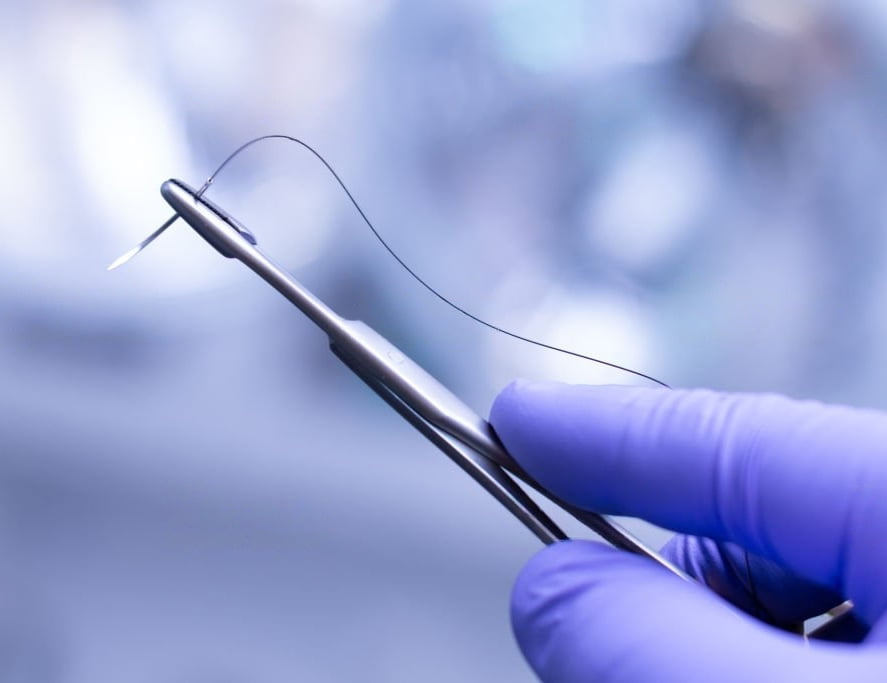
Sutures are categorized based on their absorption properties:
- Absorbable sutures, which degrade naturally within the body and do not require removal.
- Non-absorbable sutures, which remain intact and must be manually removed after healing.
Regarding material, sutures are classified as:
- Natural sutures, such as silk and catgut.
- Synthetic sutures, including polyglycolic acid (PGA), polydioxanone (PDS), nylon, and polypropylene.
Structurally, sutures are divided into:
- Monofilament sutures, which reduce infection risk.
- Multifilament sutures, which offer greater flexibility but may harbor bacteria.
Characteristics of Absorbable Sutures
| Suture Type | Absorption Time | Features | Applications |
|---|---|---|---|
| Plain Catgut | 7-10 days | Natural fiber, induces inflammatory response, rapid absorption | General surgery, internal sutures |
| Chromic Catgut | 10-21 days | Treated for enhanced durability, delayed absorption | Obstetrics, gastrointestinal surgery |
| Polyglycolic Acid (PGA) | 14-28 days | High tensile strength, moderate absorption rate | Dermatology, orthopedics |
| Polydioxanone (PDS) | Approximately 90 days | Minimal tissue reaction, slow absorption | Deep tissue closure, cardiovascular surgery |
Characteristics of Non-Absorbable Sutures
| Suture Type | Features | Applications |
|---|---|---|
| Silk | High flexibility, induces an inflammatory response | Vascular ligation, general surgery |
| Nylon | Strong and resistant, does not degrade | Skin closure, plastic surgery |
| Polyester | High tensile strength, multifilament structure | Cardiovascular procedures |
| Polypropylene | Minimal tissue reaction, monofilament structure | Long-term surgical applications |
Classification of Suture Needles
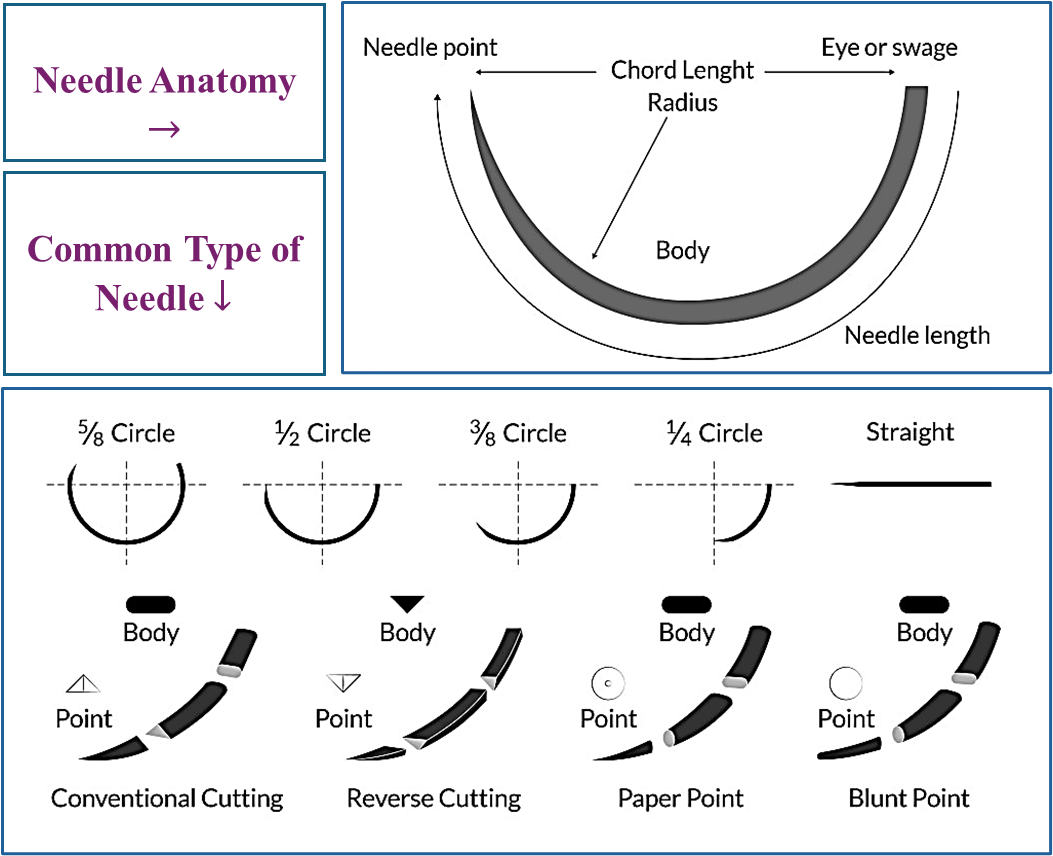
Suture needles are categorized based on tip shape, curvature, and attachment method.
- By Needle Tip Shape:
- Cutting Needle: Sharp-edged, ideal for dense tissues like skin.
- Round Bodied Needle: No cutting edge, suitable for soft tissues like muscles and organs.
- Reverse Cutting Needle: Designed to minimize tissue damage, commonly used in plastic surgery.
- By Needle Shape:
- Curved Needle: Widely used in general surgery.
- Straight Needle: Limited use, mainly for surface suturing.
- Half-Circle & Three-Quarter Circle Needle: Ideal for deep tissue suturing.
Choosing the Right Suture and Needle
The selection of sutures and needles depends on tissue type, wound depth, patient sensitivity, and surgical procedure.
- For skin sutures, non-absorbable sutures and cutting needles are recommended.
- For soft tissues like muscles, absorbable sutures and round-bodied needles are preferred.
- Absorbable sutures are more sensitive in contaminated environments, making non-absorbable sutures a better choice in high-infection-risk cases.
- Monofilament sutures reduce inflammatory responses, while selecting the correct suture diameter depends on tissue thickness and surgical requirements.
Comparison of Leading Suture Brands
Globally recognized brands such as Ethicon, Medtronic, B. Braun, and Covidien have established themselves as industry leaders, offering high-quality absorbable and non-absorbable sutures. These brands adhere to international medical standards and provide reliable solutions for various surgical applications.
Emerging brands are also entering the market with cost-effective alternatives, advanced designs, and specialized sutures tailored for specific surgical needs. These newer brands focus on reducing inflammation, improving wound healing rates, and offering price-competitive solutions, making them valuable options alongside established manufacturers.
Conclusion
Selecting the appropriate suture and needle requires careful consideration of surgical environment, wound type, tensile strength requirements, and infection risk. High-quality, standardized sutures contribute to faster healing, minimized complications, and enhanced patient outcomes across diverse medical procedures.